Sunday, April 19, 2015

You Never Forget Your First Time


I got the idea for this post as I was writing last weeks blog when we were "...going forward into the past" a.k.a. remember when. Between last Saturday and now, I've been looking at old pictures, new hot rods, and cool videos of people "exercising" their high performance vehicles after a winters nap. Other ideas popped into my head as I spent some time yesterday morning up at my oldest daughters garage working on a Chrysler 300M that I picked up for basic transportation purposes. My wife will drive it mostly - which is fine. The only things she cared about was that the car was in good shape, was comfy, and had heated leather seats for the wintertime. It was definitely worth the $500 I paid for it, even though we had to dig it out of a 5 foot snowbank in March. This was not the first time I had performed this ritual.

You never forget your first time... car wise, people. Let's keep it out of the gutter. Those other memories I don't even want to know or hear about. I relayed a few stories last week about how I got involved with muscle cars, which lead to a love of drag racing, and then hot rods, and then street rods, and then...
I still fully embrace all facets of the American hot rod and muscle car, but here's a few of my firsts on several fronts. Be sure to comment and/or email yours.

First car - I can remember turning 16, getting my drivers license, having a full time job that summer (and part time the rest of the year), and jonesing for my 1st car. It was a mutual thing between my parents & I because the novelty of driving me around everywhere - and picking me up from work late at night - was wearing off. Cars were a lot cheaper back then, but unfortunately, minimum wage was
only like $1.65 an hour. On the bright side, however, we had an elderly couple who were snowbirds, before there even was such a term for that. They owned a 1970 Mustang with a 302 V-8 coupled with a C-4 automatic. It was the formal hardtop model, so it looked more sedate than it's siblings.
Still though, it spent winters in Florida, and was in immaculate shape. They purchased a new Ford Pinto wagon when they thought the transmission in the Mustang was shot - it wouldn't go into 1st. The local Ford dealer didn't take it in trade - he didn't want to deal with it. They offered it to me for $250 bucks. They thought maybe my Dad & I could "tinker with it." Before committing to purchasing the car, my Dad & I took it out for a test drive and realized the transmission was fine - it was the column shifter that was slightly fubared and couldn't be shifted manually down into 1st. As long as we kept it in drive - it shifted perfectly. We informed our neighbors about this, but they already had another car and sold it to me for the same price anyways.

First mistake selling a car - About a year later, and still driving the Mustang, which by this time had everything fixed - but also added an aluminum intake, 4-barrel carb, new brakes, and dual exhaust to the mix - our neighbors were complaining about the tons of problems they were having with the Pinto, and wanted to buy the Mustang back... for $2000 dollars. That was over a summers worth of paychecks! The car still looked great, sounded great, and actually ran better than when they sold it. They were tickled I took such good care of it. I was urged heavily by my parents to sell, which I did, but the transaction was also fueled by the thirst for another "cool" car - and now I had $2000 to spend! That was my 1st mistake.
The 2nd mistake came shortly thereafter. I searched for weeks for a replacement, but there seemed to be a drought of offerings. Once again, my parents were getting annoyed driving me around (the feeling was mutual) and I broke down and purchased a Ford Granada. The problem was, I needed wheels - beyond yesterday! I tried to reconcile myself that it was a 2-door model with a V-8, in good condition, and it was red. Within a week I entered sellers remorse. The Granada was way heavier than the Mustang, the V-8 had so much smog equipment on it that the performance wasn't even marginal, the trunk always leaked (as did the rear tail lights) and a year later the transmission blew out. I somehow managed to sell it for $500 to a mechanic due to the low mileage and the fact it was practically rust free.

First time street racing - Now, I'm not advocating street racing here. Yes, I know it's been happening since at least the late 40's, and like working at McDonald's - a lot of people have done it. I'm just relaying a memory. It was when I lived in Worcester Massachusetts and the race took place along Park Avenue, which was a major 4-lane roadway that went through the center of the city. There were also numerous traffic lights, but all were about a 1/2 mile apart.
I was actually a passenger in my friends 1966 Dodge Coronet - a beautiful dark blue 2-door that came from the factory with a big block 383. At a time when Mopar's were not as big as they are today, hardly anyone could tell the difference between a 383 and a 440 V-8, especially when my friend had the 383 lid on the air cleaner assembly. The engine was modified and had about 600 horsepower that was hooked to a Hemi 4-speed. And no one really knew what a Dana 60 rear end was or just how bullet proof it was... until my friend had hit 110 mph by the top of 3rd gear...

First muscle car - This one is short and sweet. A 1971 Dodge Charger R/T with a 440 magnum and automatic (so my wife could drive it occasionally). It was sprayed with an odd shade of green, but it was modified nicely. Yes, I street raced it occasionally in Worcester. Both my daughters had their baby pictures taken on the hood of that car. I sold it to put a down payment on a house.

First (and last) "real" restoration - This one is almost as short as the Charger story. What I mean by "real", is this was the only vehicle I've ever owned where I did a frame-off restoration. I went through everything over the course of 5 years - paint, body, interior, tires, wheels, suspension, brakes, engine, transmission, the works. The interior was about 75% done when I sold it. It was a 1979 Chevy C-10 truck that had less than 35K original miles with a very healthy small block 350. In the end, it had a $6000 tri-color paint scheme - Atomic orange pearl, black metallic, and silver pin-striping. God knows how much else was invested into the truck.
The reason why it is my last, is I realized I do not have the time, patience, and strength to sand that much metal ever again - even with the help of others. It literally was "sand until you bleed." Thank God a woman wanted to purchase it for several years and wanted it WAY more than I did. That made things easier...

I want to hear form you!
Until next time, peace out -
Dave

Saturday, April 11, 2015

Going Forward Into The Past


Is it me or we going through another phase of "remember when..." in certain sections of hot rodding and racing? The automotive manufacturers, after the last 10-15 years, seemed to have gotten the retro novelty out of their system. Save for the Challenger, the other performance heavy-hitters consisting of the Charger, Mustang, and Camaro seem to be moving forward once again in design. Rat rods, while still cool, aren't on the top of the hit-parade anymore. Even certain makes & models of muscle cars that seemed to be featured every month in different magazines because of popularity isn't the norm anymore.

I don't know about you, but these are some of the things I'm seeing in the following areas -

1). Street / Hot Rods - While there's still a tremendous amount of diversity out there, which is a very good thing, I'm seeing more experimentation of colors, paint, and styling that were prominent in the late 50's into the early 60's. Remember when nose jobs, chopping, and channeling were popular with regular vehicles and not just 20's & 30's rods? This seems to be making a comeback.The car pictured to the left is a 1965 AMC Marlin. It has a custom grille insert, along with a Chevy Nova hood, and a bumper from a 1965 Plymouth. Chew on that for a while...
One thing I'll admit I thought would never come back (and in a way hoped it wouldn't) was the pro street concept from the 80's. The difference this time is the cars are WAY more streetable, look closer to their original stock configuration, and make more power without the complexity or financial overload.

2). Drag & NASCAR Style Racing - I've mentioned this before; nostalgia drag racing is huge. Smaller, less complicated nostalgia drag racing events are really gaining popularity. As an added bonus, Gasser style race cars are making a serious comeback. All three are a top-shelf "remember when..." warm fuzzys. I came across a photo of what is considered "The Day Drag Racing Began." This event took place in 1949 at a landing field at Goleta in the Santa Barbara area. It was a contest between two well known dry lakes veterans, Tom Cobbs and Fran Hernandez. Just groove for a moment on the picture. Talk about humble beginnings...

Now, note in the second half of the notation above; NASCAR style. While Daytona will always be Daytona, and all the pomp and circumstance that goes along with it, local roundy-round racing is still riding high on the popularity scale as well as participation despite the economy. Why? I call it the D.I.Y. factor - anyone can do it and it doesn't have to look pretty either. Competition and fun is the name of the game and financials come farther down the totem pole of priorities.

3). Muscle Cars - If you're old enough to remember, there used to be a concept called "Day 2" looking performance cars. This was in relation to the day after a muscle car was driven off the dealer lot and the owner was now in the process of adding wider tires, mag wheels, headers, and maybe some aftermarket goodies like an aluminum intake manifold, a bigger carb, and an accurate tachometer.I will admit - this is something I grew up with. As a result, when the "factory restoration" craze swept the country in the mid to late 80's, it was cool to see that stuff, but for me, the novelty wore off fairly quickly. I was pumped when "Day 2" restorations started becoming popular. And yeah - the cars get driven... a lot.

4). Rarity Be Damned - One of the fantastic things about this hobby is the fact that there is truly something for everyone. It also leads to freedom of, "it's your car - do what you want with it." In the past two months, I've read articles ranging from the first Shelby Mustang (a 1965 GT350) that was restored to 110% originality, to a 1956 Chevy that was once an original matching-numbers vehicle, and is now an 6-second (that's not a misprint) street machine complete with wheelie bars and parachutes. Both are cool for their own reasons, but I'm grooving more on the 56 Chevy. It's totally street driven (and easily I might add) and it still wears it's original paint. (Photo courtesy of DRD Photos).


5). Sleepers - What else can you say? Everyone seems to have a soft spot for these rigs. Except now things are really getting creative. Sometimes it's a stock looking sedan that runs 11's. Other times, it becomes a quest of "you want to do what with what?" Beware - technology, whether it's nitrous or turbos, can take an ordinary looking car that can now eat up some of the fastest street cars out there. Case in point - this 1969 Chevy wagon is a high 9-second quarter mile street / strip terror. By the way, it weighs 5100 pounds...

Lastly, I'm adding a small feature to the weekly blog. Apparently a number of you liked some of the junkyard pics I've posted and wanted some more. Either these pics are increasing your appreciating of these particular specimens of Detroit iron in some way or you're just sick bastards. Be that as it may, I'll be posting one new pic per blog, as long as I have them.

Until next time, peace out.
Dave

Saturday, April 4, 2015

Where It All Began...


Sometimes it's strange where ideas come from. Samuel Smiles once said, "... if you sow a thought, you reap an act; Sow an act and you reap a habit; Sow a habit, and you reap a character; Sow a character, and you reap a destiny." So true. I was doing some proof reading yesterday on a book I've finished writing and will be submitting shortly on performance / muscle car advertising from 1955 to the present. I stopped and asked myself, "How did I get to this point? Ten years ago, I would have never even considered writing a book."

I thought about how I became interested in performance cars, or cars in general for that matter, in the first place. I'm sure you all have read countless articles and books on famous race car drivers that almost always ask the question, "How did you get started?" If you're one of those performance nuts, be it via muscle cars, drag racing, NASCAR, or some avenue of street rod, how did you get involved in the hobby? Was it through a parent, other relative, or a neighbor? Was it early in life, when you were a teenager, or after you were an adult?


I can remember when I first became interested in cars as well as muscle / performance cars. It was back in the late 60's when muscle cars were actually called "super cars". It was a great time - at least in my eyes. I lived in this wonderful euphoric place called the suburbs just over 30 minutes (in 1968 commuting time) south of New York City. Big time drag strips were nearby, NASCAR was on TV, Mattel debuted their infamous Hot Wheels toy cars, occasional street racing was common, hot rods were everywhere, gas as well as speed parts were plentiful and cheap, and our neighbors were cool.

Our cool neighbors were my initiation to performance as my Dad was Mr. Counter-culture of the neighborhood. He drove Jeeps, VW's and Saab's. My Dad still taught me things about cars and their basic function, we just never owned anything that had over 90 horsepower. He was more focused on practicality and good gas mileage. Our neighbors on the other hand - totally different story. To the right was Lenny and his 1967 Hemi GTX. To the left was a guy named Al; he owned a 1968 Ford Torino with a 428 Cobra Jet. Did I mention about five houses down lived Frank who owned a 57 Chevy 210 with a Hilborn injected 427?

My Dad realized that instilling any virtues about foreign cars was out the window when I started building models of "Jungle Jim" Liberman's Camaro funny car, or the 31 Ford coupe with the blown 427 Cammer engine, or the wild-looking 'Cuda street machine. I was a child of "more"... the faster it was, the cooler it looked, the more I dug it. It didn't matter if I was at the race track or a car show. Moving or standing still - if it rung my bell, that's all that mattered.

The same could be said for motor sports in general, be it NASCAR, the NHRA, or a local car group, or a single enthusiast. Throughout automotive history, some things haven't changed - going faster, making things better, new ideas, daring to be different, experimenting - it's always been there, but it had to begin somewhere. Look at the lightning-fast evolution of drag racing and funny cars in the 60's, for example. In just five short years, the changes were astounding. Ditto with NASCAR - start at 1960 and go forward 10 years - you'll be sitting back as well going, "Holy crap!"

That's one thing I love about hot rodding and street rods - the game is always changing - and change is good. However, we should always remember and honor the past. I hope we never get to the point where we shut the door on it. I've been fortunate in my life where I've had the opportunity to not only take both my daughters to car shows, but also my grand-kids. My wife and I still attend them. My immediate family can, at minimum, can appreciate an "old car", be it a street rod, muscle car, or even a rusty jalopy on the back of a trailer being carted home to be restored in some fashion.

For a time, I was worried that much of the modern generation (kids born after 1995) wouldn't "be into" cars (domestic or imports) like they used to be. This was due to the fact that their parents never really lived in a time where they could catch the car "bug" or the fact that cool and/or fast cars were everywhere. These parents only sort of remember what it might have been like. Their kids now wanted "image" cars  - vehicles that were higher end or were more like a status symbol. However, in the latest issue of Hot Rod magazine, I received some good news:
"... all of a sudden, there's a new generation of car guys and girls. Brand bias is waning and more people are tolerant of both imports and domestics. Cars are cool again. MTV released a study that claimed "millennials have drive", basing it on a deep insight: they'd rather give up texting for a week than lose their car for the same period. Can you imagine the pain?"

Until next time, peace out.
Dave

Saturday, March 28, 2015

Doing A Lot With What Little You Have


That sentence in the title line - "Doing a lot with what little you have" - I read that about a year ago in an article about Chrysler's 426 Hemi engine. That incredible motor celebrated its 50th anniversary in April 2014. It got me to thinking about numerous aspects of the automotive industry - everything from advertising to racing - both then and now.

There's been a great deal of Internet gab on both the Hellcat Challenger and Charger. How is it that the Chrysler Corporation can pull off a 700+ horsepower super-car that can actually hold more than two passengers, and rings in at under $67,000 dollars, when neither Ford nor Chevy can accomplish the same thing? And it's not just this one incident belonging to Dodge. History has proven that other manufacturers (and sometimes individuals) can pull off the same type of concept with either less funds, less development time, or less experience. The secret lies in applying the lessons one learns a little better.

It reminds me of the time I ventured into my local Home Depot and asked an employee at the service desk if the store still carried books on a particular subject. He told me the store no longer stocked them, but one could be ordered. He went on to say, that many customers routinely order books on-line through various outlets anyway. It just didn't make sense to stock them anymore where they will just collect dust. He then told me to go on You Tube. "If you want to learn something, chances are you can find some sort of tutorial on You Tube. That's how I learned everything I know about plumbing, wiring, and carpentry." It kind of blew my mind, but he was right. That's one of the rare beauties of competition - it breeds creative innovation. Let's look at some other examples from several timetables:

 - I was skimming an article this morning from Jalopnik.com where a guy named Adam had owned a 1968 Camaro for years and the car was looking rather long in the tooth. He didn't have the funds to pay someone to restore it and he didn't have the skills to do it himself. He ended up enrolling in a auto restoration course at a local college. In that class, he learned that if he had the willingness, the patience, basic hand tools, and the space of a 2-car garage, anything was possible. Aside from good 'ole trial and error, he was also told You Tube was a valuable asset.

 - Another great example is the late Bill "Grumpy" Jenkins and his Chevy Nova from the 1966 drag racing season. With almost zero factory support from Chevrolet, he managed to be one of the most feared and competitive racers in quarter mile action that season. How? Creative thinking and innovation. Applying everything he learned ranging from suspensions, to serious weight savings, to finding every loophole in the NHRA rule book, Jenkins may have been an underdog in his realm, but was a true thinking mans racer. Throughout his career, he was known to try anything at least once - from making his own crude traction bars to literally cutting carburetors in half and riveting them back together in a different configuration.

 - Remember NASCAR before big sponsors and factory support? Maybe not, but I'm talking about the earliest of years from the late 40's through the early 50's. Talk about creative innovation - you can thank the illegal profession of bootlegging for some of the sports best drivers like Junior Johnson. It wasn't rocket science - take a bunch of young guys living in Virginia, the Carolinas, and Georgia who had no other choice to survive (you need money to live on and survive, remember?), except by running moonshine. They became very skilled drivers because they were always running from the law. When they weren't doing that, these guys would race each other on the highways and back roads. Someone, somewhere, got the bright idea to cut a crude circle track in some cow pasture, and the rest they say is history.

 - Let's quickly look at advertising from the golden era of muscle cars. It's been said that Plymouth had more to gain than many other manufacturers. It's possible that stemmed from not being a sales leader like Chevy, Ford, or even it's sibling Dodge. However, it also may be the reason why Plymouth went almost bat-shit crazy with it's marketing campaigns from 1968-70. While many enthusiasts call some of their ads psychedelic or off-the-wall, it captured the true spirit of not only the muscle car phenomenon, but the times as well. In this case, competition truly bred innovation. LSD not required!

 - Lastly, if you still need a glaring example, look to the hot-rodder himself or herself. The rat rod movement is also a prime example of innovation. For almost 70 years, enthusiasts have been cutting, swapping, shaping, and dreaming up automobiles, in the pursuit of going faster, being different, or in many cases, saving money and just using what you have. Glance through any issue of Hot Rod, Car Craft, or street rod publication, especially from the 50's and 60's, and you'll find engine and drive-train combinations in vehicles that were never meant to all be together.

Dare to be different, people. Be creative and innovative. It's like a muscle... use it or lose it.
Until next time, peace out,
Dave

Saturday, March 21, 2015

"It's Just A Car..."


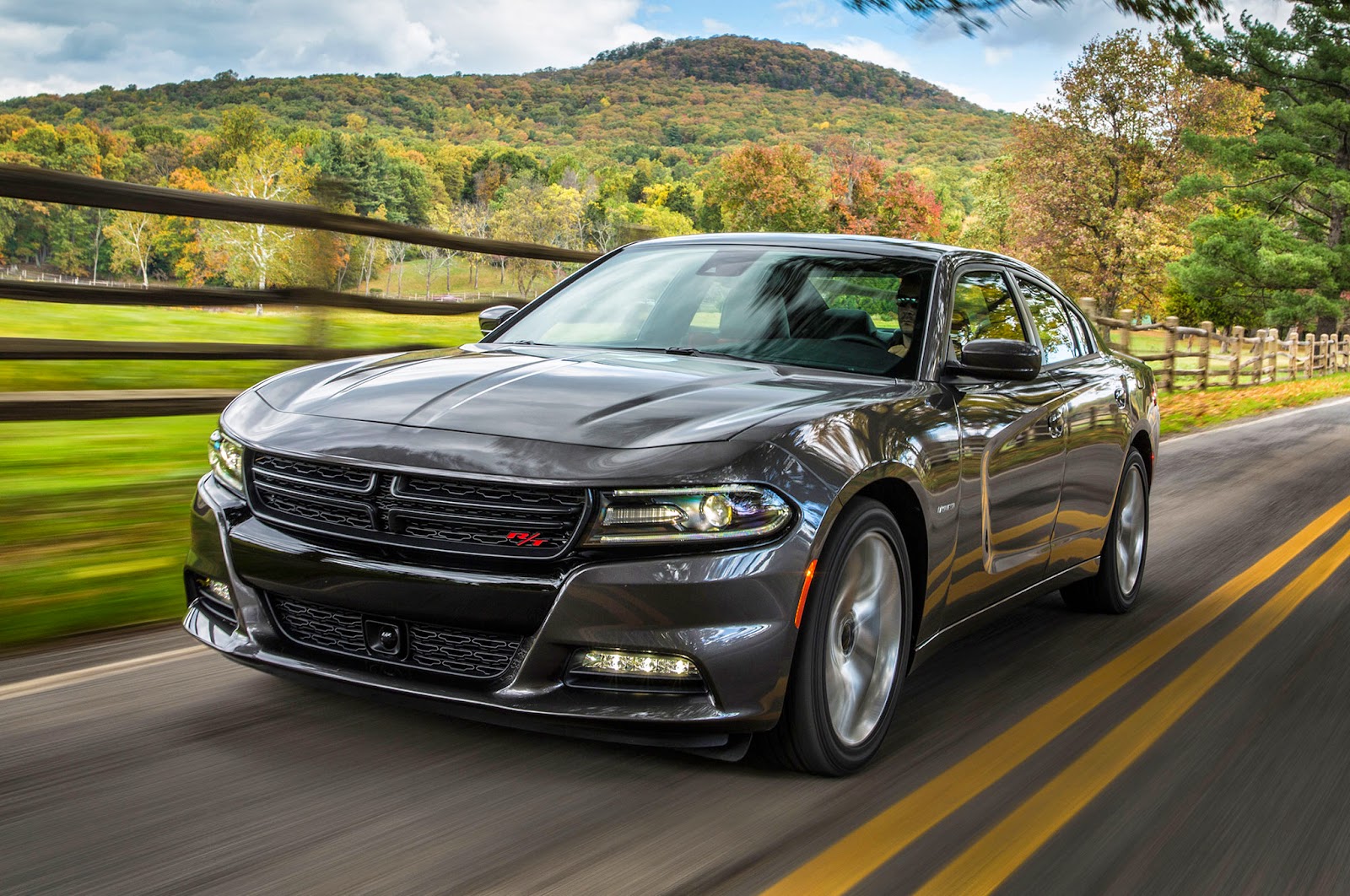
   "It's just a car..." You gotta admit - that statement can conjure up a mixed bag of emotions depending on how it's used. It also depends on when or the time-frame as to its use. This concept crossed my mind the other day as I was delivering an almost new 2015 Dodge Charger with about 6,000 miles on it to my oldest daughter and son-in-law. They were going to attend an automotive technicians convention in Connecticut over the weekend and didn't feel like taking their 4x4 truck which gets around 16 miles to the gallon at best. For just under $100 for the entire weekend, they could enjoy worry-free driving and have some fun to boot. The icing on the cake, was they would be reimbursed for the cost of the rental plus fuel. In other words, their use of the Charger was completely free.

While we were driving around, both my daughter and her husband were surprised at the pickup the six cylinder Charger had. No V-8 or turbo under the hood. Welcome to 2015 kids and the joys of variable valve timing, computer and electronic controlled everything, as well as modern engineering to the nth degree. While we were talking and they were both excited about driving a new Charger for the first time, the following words came out of my mouth; "... it's just a car."

That got me to thinking if this scenario were any different. If I was driving an SRT Challenger Hellcat, would I be saying the same thing? Or what if we were cruising around in a cool street rod, even though it was a modern kit from Factory Five? Taking things a step further, did people say the same thing 45 years ago in regards to a Hemi 'Cuda, Boss 429 Mustang, or an LS6 Chevelle?
"Those were unique and special cars... even back then", you might respond. Well, chew on this - "Big Willie" Robinson regularly drove and raced a 1969 Hemi Daytona on the streets of Los Angeles for years. That car was also unique, or special, or rare back then. To Willie, it was just a car...

If you have an afternoon, browse through some enthusiast magazines from the late 50's through the early 70's. Maybe you have a friend or relative who has quite a collection. There are test drives (at least that's what they called them) of now-very rare cars that the staff is just absolutely beating on. I'm talking about Shelby Mustangs, 425 horsepower R-code Fords, 427 Yenko Camaros and Novas, and modifying a Hemi engine with only 100 miles on it. Relax - it's just a car...

I feel what affects a certain mindset at a particular time is a vehicles purpose. Take for example, the ultra-rare 1963 Pontiac "Swiss Cheese" Catalina. Pontiac didn't build these cars (and associated parts) to become the high dollar collectibles they are today. They were built for one thing only - drag racing. And be damn good at it as well.

I can remember a time back in the late 60's and early 70's when the round chrome air cleaners that were stock on Chrysler's mighty 426 Hemi were considered "trash". Too restrictive in many a speed-freaks eyes. Why use them when something better that could help produce more horsepower was available? They were just parts on a car...

It's that unique prospective that allows me (and others) a certain mental freedom. Some of those freedoms can be found in driving, not trailering, a rare muscle car. Or perhaps cruising in a beautiful street rod that has over $75,000 dollars invested in it. It may involve nostalgia drag racing a factory 1968 Hemi Dart or Barracuda. It also allows me to view with an open mind and photograph a rare muscle car rotting away in a salvage yard. Instead of asking, "How could someone allow this to happen?" I can just remember; Hey - back then - it was just a car...

Until next time, peace out,
Dave

Saturday, March 14, 2015

Giving Conventionalism The Middle Finger - And Loving It!

In my last blog, I mentioned that over the past 10 years technology as well as performance has grown by leaps and bounds in the automotive field, in regards to new offerings from the manufacturers. I was reading an article yesterday where Dodge has placed a temporary moratorium on any new orders for the 2015 Dodge Charger & Challenger SRT Hellcats until they can fill existing orders. It seems that Dodge cannot keep up with the demand - too many people want them. They can't build them fast enough. With an MSRP starting at under $67,000 dollars (which may sound like a lot of coin... okay; it is but...), these 707 horsepower vehicles are the bargain of the decade.

It reminds me of the 60's - things were coming unglued and changing fast. The high performance and hot rod scenes were no exceptions. In the past few weeks, we've glanced at the A/FX altered wheelbase drag strip cars from Dodge & Plymouth as well as the B/FD Mercury Comets from the 1964-65 seasons. Yet, less than a year later, we had even more radical entries with the Brutus GTO (with serious engine set-back in addition to altering the wheelbase) and the first true funny car (tube chassis with hinged all fiberglass body) from "Dyno" Don Nicholson and his Eliminator 1 Mercury Comet.

In my opinion, what has been emerging over the past few years out of Detroit, as it was back in the 60's, is a time of unrestricted innovation. Granted, the term "unrestricted" may be too generous as there are way many more mandates, policies and bullshit that has to be hurdled over today when compared to fifty years ago, but the concept is the same - there are still people passionate about high performance that want to push the limits. Fifty years ago, it seemed reasonable to cut up new cars and stuff nitro-burning engines up front. Just as reasonable today to offer a 707 horsepower muscle car to the general public.

In some cases, this innovation produced some lucrative industries entirely by accident. A classic example is the wheel-stander industry. The innovator was the original 1965 Hurst Hemi Under Glass Plymouth Barracuda. Originally designed for better traction and weight transfer for A/FX drag racing, it unleashed one of the wildest rides in history - and became strictly an exhibition vehicle that still draws huge crowds today. Looking back today, one would assume that someone, somewhere would have figured out that stuffing an almost 1000 horsepower engine in the backseat of a car just might tip the scales a bit too much in the "weight transfer" department. But hey, even the best minds in relation to innovation have learning curves.

The same could be said about the aerodynamic wars in NASCAR racing from 1968-70. Racing fans absolutely ate up the battle between Chrysler and Ford in regards to the stock cars that were used by the likes of Richard Petty, Cale Yarlborough, and Donnie Allison. Since the manufacturers were already limited to engine size, using a single carburetor set-up, and vehicle weight, the only thing that was left was reducing drag, or making the vehicles more aerodynamic, thus making them able to go faster. Several of these body modifications showed up throughout the season and the sanctioning body had a hell of a time trying to keep up.

All these examples show then, as today, that there are people passionate about speed and performance that continue to push the envelope. From the late 50's through the early 70's, individuals as well as corporations took the general rule book and promptly threw it out the window. Or at minimum, tried to find as many loopholes as possible. They gave conventionalism the middle finger - and the fans loved it. By the looks of things, they still do.

Until next time, peace out.
Dave

Saturday, March 7, 2015

Because The 50's, 60's and 70's Were Cool!

Before any email's come flying back at me, I think I'll clarify that title line. I'm not saying other decades weren't cool - it's my opinion that every year and decade throughout history has it's memorable moments and not all of them are bummers. Looking further, the past five years in the decade we're in, automotive performance wise, are some of the best in over 40 years. What I basically hitting on here is the fifteen years between 1957 to 1972, again automotive wise, was an easier time. It was easier to work on the vehicles, the rules in racing were much less complicated, as well as the outside influences of sponsorship & money weren't a necessity in order to compete. Bottom line - horsepower was available to everyone and the admission for participation was cheap. Check out the two pictures on each side of this paragraph - while they're both 6 cylinder engines and both from a Ford Mustang, the one on the left is from 1965, the pic on the right is  from 2012. Which one would you want to change the spark plugs on given a Saturday afternoon?

What I also find incredibly interesting is that despite the massive differences and changes in the automotive field during this period, the common thread of influences were always there. Things just got faster, wilder, and more innovative as the years spun along. For example, in 1957 the American
Manufacturers Association (AMA) decided on a racing ban  - where manufacturers would no longer be so actively involved in motor sports - mostly in drag racing. Within seven short years, not only was the ban history, but manufacturers went as far as producing wild-looking altered wheelbase vehicles as well as sticking dragster engines into basically stock-bodied vehicles. Then, as it does now, performance sells cars - even if it's completely over the top and total overkill. Case in point, Jack Christman's B/FD 1964 Mercury Comet. Fans loved this wild ride with it's quarter mile long burnouts. As a result of this insanity, 100,000 mile durability runs, as well as other racing adventures, Comet sales rose 55% for the model year.

Finally, if we ponder the performance game and shift into a "what it was like then verses what it's like now", I will admit that the common threads of going faster and influences are still there, even though technology has a big hand in today's quest for more speed. We have street cars (and quantifying that concept in itself is a whole other topic) that can easily dip into the 7 or even 6 second quarter mile time brackets, where back in the 60's, that was strictly dragster and funny car territory.

Another aspect of the late 50's to the early 70's that was totally cool (and will never be repeated) was performance car advertising. While Madison Avenue was rather conservative during the 50's, it started to let it's hair down by the mid 60's, and was totally hitting the acid by 1969. This week I've included two advertisements for the Plymouth Barracuda - one from 1964, the second from 1969. Same car, same platform (A-body), same manufacturer, but the differences are staggering. Everything from the images, to the wording, to the target audience changed in five short years. And you & I both know, that we will never see ads like the one above for the 'Cuda 340 again.

I can honestly say, I believe many of us in the northern half of the US have finally made it over a huge hump. March is here, daylight savings time starts this weekend, this stubborn Arctic weather pattern that we were in for 6 weeks is finally breaking, and the snow is melting! We had a taste of 50 degree weather here in Maine a few days ago for the first time since December. It will, however, be at least a few more weeks before we can actually start to think about driving our vintage iron - be it a street rod, truck, or motorcycle. I'm gathering more information about upcoming shows that are happening from late spring through mid-fall. Pics and stories, along with more details of where we'll be, are forthcoming. I'll leave you with a vintage photo of a Ford dealership in New England that was taken during the winter of 1969. Check out the Mustang and other classic vehicles in the picture. Just goes to prove that these cars were "common transportation" back then...

Until next time - peace out.
Dave