Saturday, March 28, 2015

Doing A Lot With What Little You Have


That sentence in the title line - "Doing a lot with what little you have" - I read that about a year ago in an article about Chrysler's 426 Hemi engine. That incredible motor celebrated its 50th anniversary in April 2014. It got me to thinking about numerous aspects of the automotive industry - everything from advertising to racing - both then and now.

There's been a great deal of Internet gab on both the Hellcat Challenger and Charger. How is it that the Chrysler Corporation can pull off a 700+ horsepower super-car that can actually hold more than two passengers, and rings in at under $67,000 dollars, when neither Ford nor Chevy can accomplish the same thing? And it's not just this one incident belonging to Dodge. History has proven that other manufacturers (and sometimes individuals) can pull off the same type of concept with either less funds, less development time, or less experience. The secret lies in applying the lessons one learns a little better.

It reminds me of the time I ventured into my local Home Depot and asked an employee at the service desk if the store still carried books on a particular subject. He told me the store no longer stocked them, but one could be ordered. He went on to say, that many customers routinely order books on-line through various outlets anyway. It just didn't make sense to stock them anymore where they will just collect dust. He then told me to go on You Tube. "If you want to learn something, chances are you can find some sort of tutorial on You Tube. That's how I learned everything I know about plumbing, wiring, and carpentry." It kind of blew my mind, but he was right. That's one of the rare beauties of competition - it breeds creative innovation. Let's look at some other examples from several timetables:

 - I was skimming an article this morning from Jalopnik.com where a guy named Adam had owned a 1968 Camaro for years and the car was looking rather long in the tooth. He didn't have the funds to pay someone to restore it and he didn't have the skills to do it himself. He ended up enrolling in a auto restoration course at a local college. In that class, he learned that if he had the willingness, the patience, basic hand tools, and the space of a 2-car garage, anything was possible. Aside from good 'ole trial and error, he was also told You Tube was a valuable asset.

 - Another great example is the late Bill "Grumpy" Jenkins and his Chevy Nova from the 1966 drag racing season. With almost zero factory support from Chevrolet, he managed to be one of the most feared and competitive racers in quarter mile action that season. How? Creative thinking and innovation. Applying everything he learned ranging from suspensions, to serious weight savings, to finding every loophole in the NHRA rule book, Jenkins may have been an underdog in his realm, but was a true thinking mans racer. Throughout his career, he was known to try anything at least once - from making his own crude traction bars to literally cutting carburetors in half and riveting them back together in a different configuration.

 - Remember NASCAR before big sponsors and factory support? Maybe not, but I'm talking about the earliest of years from the late 40's through the early 50's. Talk about creative innovation - you can thank the illegal profession of bootlegging for some of the sports best drivers like Junior Johnson. It wasn't rocket science - take a bunch of young guys living in Virginia, the Carolinas, and Georgia who had no other choice to survive (you need money to live on and survive, remember?), except by running moonshine. They became very skilled drivers because they were always running from the law. When they weren't doing that, these guys would race each other on the highways and back roads. Someone, somewhere, got the bright idea to cut a crude circle track in some cow pasture, and the rest they say is history.

 - Let's quickly look at advertising from the golden era of muscle cars. It's been said that Plymouth had more to gain than many other manufacturers. It's possible that stemmed from not being a sales leader like Chevy, Ford, or even it's sibling Dodge. However, it also may be the reason why Plymouth went almost bat-shit crazy with it's marketing campaigns from 1968-70. While many enthusiasts call some of their ads psychedelic or off-the-wall, it captured the true spirit of not only the muscle car phenomenon, but the times as well. In this case, competition truly bred innovation. LSD not required!

 - Lastly, if you still need a glaring example, look to the hot-rodder himself or herself. The rat rod movement is also a prime example of innovation. For almost 70 years, enthusiasts have been cutting, swapping, shaping, and dreaming up automobiles, in the pursuit of going faster, being different, or in many cases, saving money and just using what you have. Glance through any issue of Hot Rod, Car Craft, or street rod publication, especially from the 50's and 60's, and you'll find engine and drive-train combinations in vehicles that were never meant to all be together.

Dare to be different, people. Be creative and innovative. It's like a muscle... use it or lose it.
Until next time, peace out,
Dave

Saturday, March 21, 2015

"It's Just A Car..."


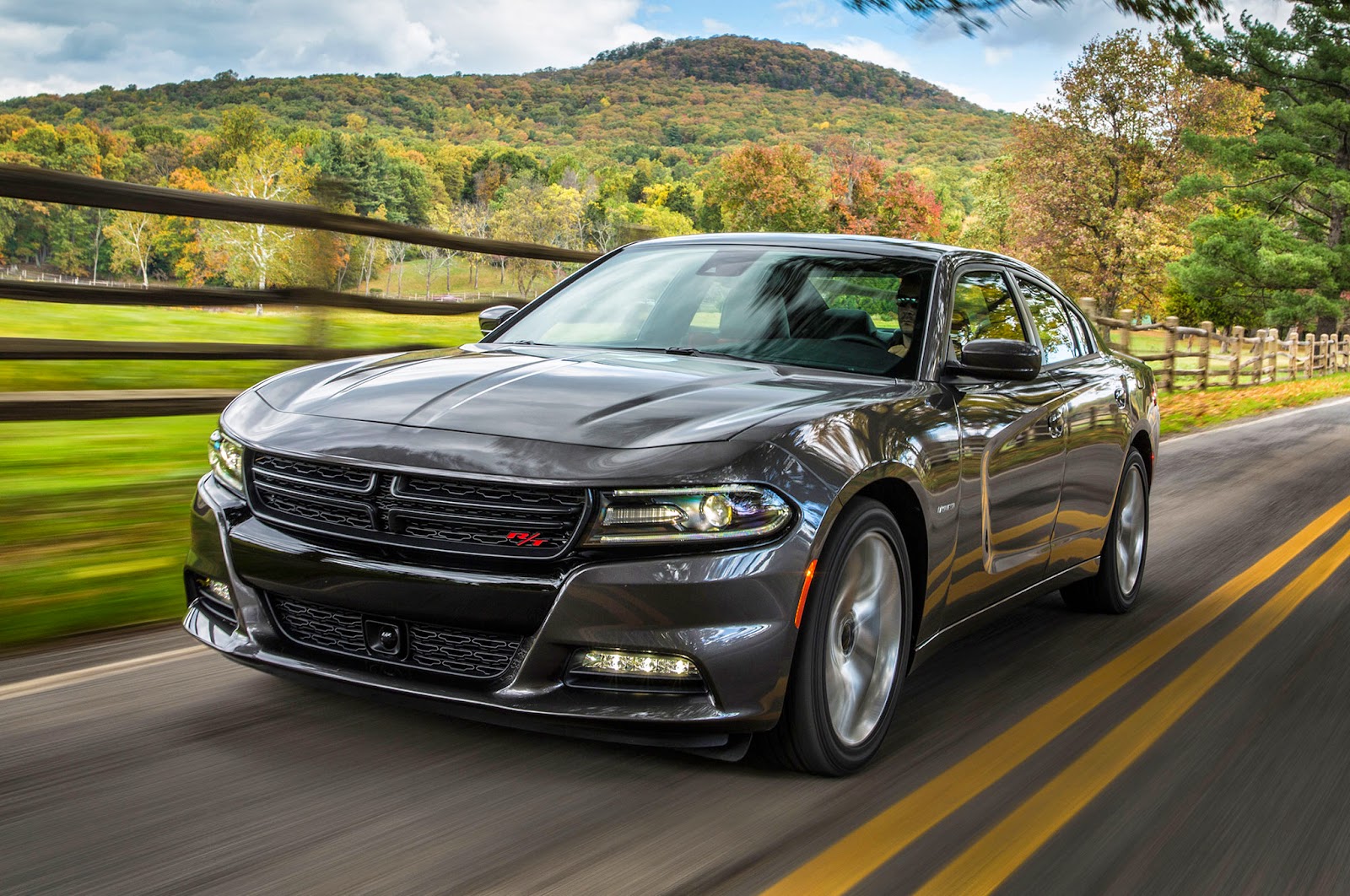
   "It's just a car..." You gotta admit - that statement can conjure up a mixed bag of emotions depending on how it's used. It also depends on when or the time-frame as to its use. This concept crossed my mind the other day as I was delivering an almost new 2015 Dodge Charger with about 6,000 miles on it to my oldest daughter and son-in-law. They were going to attend an automotive technicians convention in Connecticut over the weekend and didn't feel like taking their 4x4 truck which gets around 16 miles to the gallon at best. For just under $100 for the entire weekend, they could enjoy worry-free driving and have some fun to boot. The icing on the cake, was they would be reimbursed for the cost of the rental plus fuel. In other words, their use of the Charger was completely free.

While we were driving around, both my daughter and her husband were surprised at the pickup the six cylinder Charger had. No V-8 or turbo under the hood. Welcome to 2015 kids and the joys of variable valve timing, computer and electronic controlled everything, as well as modern engineering to the nth degree. While we were talking and they were both excited about driving a new Charger for the first time, the following words came out of my mouth; "... it's just a car."

That got me to thinking if this scenario were any different. If I was driving an SRT Challenger Hellcat, would I be saying the same thing? Or what if we were cruising around in a cool street rod, even though it was a modern kit from Factory Five? Taking things a step further, did people say the same thing 45 years ago in regards to a Hemi 'Cuda, Boss 429 Mustang, or an LS6 Chevelle?
"Those were unique and special cars... even back then", you might respond. Well, chew on this - "Big Willie" Robinson regularly drove and raced a 1969 Hemi Daytona on the streets of Los Angeles for years. That car was also unique, or special, or rare back then. To Willie, it was just a car...

If you have an afternoon, browse through some enthusiast magazines from the late 50's through the early 70's. Maybe you have a friend or relative who has quite a collection. There are test drives (at least that's what they called them) of now-very rare cars that the staff is just absolutely beating on. I'm talking about Shelby Mustangs, 425 horsepower R-code Fords, 427 Yenko Camaros and Novas, and modifying a Hemi engine with only 100 miles on it. Relax - it's just a car...

I feel what affects a certain mindset at a particular time is a vehicles purpose. Take for example, the ultra-rare 1963 Pontiac "Swiss Cheese" Catalina. Pontiac didn't build these cars (and associated parts) to become the high dollar collectibles they are today. They were built for one thing only - drag racing. And be damn good at it as well.

I can remember a time back in the late 60's and early 70's when the round chrome air cleaners that were stock on Chrysler's mighty 426 Hemi were considered "trash". Too restrictive in many a speed-freaks eyes. Why use them when something better that could help produce more horsepower was available? They were just parts on a car...

It's that unique prospective that allows me (and others) a certain mental freedom. Some of those freedoms can be found in driving, not trailering, a rare muscle car. Or perhaps cruising in a beautiful street rod that has over $75,000 dollars invested in it. It may involve nostalgia drag racing a factory 1968 Hemi Dart or Barracuda. It also allows me to view with an open mind and photograph a rare muscle car rotting away in a salvage yard. Instead of asking, "How could someone allow this to happen?" I can just remember; Hey - back then - it was just a car...

Until next time, peace out,
Dave

Saturday, March 14, 2015

Giving Conventionalism The Middle Finger - And Loving It!

In my last blog, I mentioned that over the past 10 years technology as well as performance has grown by leaps and bounds in the automotive field, in regards to new offerings from the manufacturers. I was reading an article yesterday where Dodge has placed a temporary moratorium on any new orders for the 2015 Dodge Charger & Challenger SRT Hellcats until they can fill existing orders. It seems that Dodge cannot keep up with the demand - too many people want them. They can't build them fast enough. With an MSRP starting at under $67,000 dollars (which may sound like a lot of coin... okay; it is but...), these 707 horsepower vehicles are the bargain of the decade.

It reminds me of the 60's - things were coming unglued and changing fast. The high performance and hot rod scenes were no exceptions. In the past few weeks, we've glanced at the A/FX altered wheelbase drag strip cars from Dodge & Plymouth as well as the B/FD Mercury Comets from the 1964-65 seasons. Yet, less than a year later, we had even more radical entries with the Brutus GTO (with serious engine set-back in addition to altering the wheelbase) and the first true funny car (tube chassis with hinged all fiberglass body) from "Dyno" Don Nicholson and his Eliminator 1 Mercury Comet.

In my opinion, what has been emerging over the past few years out of Detroit, as it was back in the 60's, is a time of unrestricted innovation. Granted, the term "unrestricted" may be too generous as there are way many more mandates, policies and bullshit that has to be hurdled over today when compared to fifty years ago, but the concept is the same - there are still people passionate about high performance that want to push the limits. Fifty years ago, it seemed reasonable to cut up new cars and stuff nitro-burning engines up front. Just as reasonable today to offer a 707 horsepower muscle car to the general public.

In some cases, this innovation produced some lucrative industries entirely by accident. A classic example is the wheel-stander industry. The innovator was the original 1965 Hurst Hemi Under Glass Plymouth Barracuda. Originally designed for better traction and weight transfer for A/FX drag racing, it unleashed one of the wildest rides in history - and became strictly an exhibition vehicle that still draws huge crowds today. Looking back today, one would assume that someone, somewhere would have figured out that stuffing an almost 1000 horsepower engine in the backseat of a car just might tip the scales a bit too much in the "weight transfer" department. But hey, even the best minds in relation to innovation have learning curves.

The same could be said about the aerodynamic wars in NASCAR racing from 1968-70. Racing fans absolutely ate up the battle between Chrysler and Ford in regards to the stock cars that were used by the likes of Richard Petty, Cale Yarlborough, and Donnie Allison. Since the manufacturers were already limited to engine size, using a single carburetor set-up, and vehicle weight, the only thing that was left was reducing drag, or making the vehicles more aerodynamic, thus making them able to go faster. Several of these body modifications showed up throughout the season and the sanctioning body had a hell of a time trying to keep up.

All these examples show then, as today, that there are people passionate about speed and performance that continue to push the envelope. From the late 50's through the early 70's, individuals as well as corporations took the general rule book and promptly threw it out the window. Or at minimum, tried to find as many loopholes as possible. They gave conventionalism the middle finger - and the fans loved it. By the looks of things, they still do.

Until next time, peace out.
Dave

Saturday, March 7, 2015

Because The 50's, 60's and 70's Were Cool!

Before any email's come flying back at me, I think I'll clarify that title line. I'm not saying other decades weren't cool - it's my opinion that every year and decade throughout history has it's memorable moments and not all of them are bummers. Looking further, the past five years in the decade we're in, automotive performance wise, are some of the best in over 40 years. What I basically hitting on here is the fifteen years between 1957 to 1972, again automotive wise, was an easier time. It was easier to work on the vehicles, the rules in racing were much less complicated, as well as the outside influences of sponsorship & money weren't a necessity in order to compete. Bottom line - horsepower was available to everyone and the admission for participation was cheap. Check out the two pictures on each side of this paragraph - while they're both 6 cylinder engines and both from a Ford Mustang, the one on the left is from 1965, the pic on the right is  from 2012. Which one would you want to change the spark plugs on given a Saturday afternoon?

What I also find incredibly interesting is that despite the massive differences and changes in the automotive field during this period, the common thread of influences were always there. Things just got faster, wilder, and more innovative as the years spun along. For example, in 1957 the American
Manufacturers Association (AMA) decided on a racing ban  - where manufacturers would no longer be so actively involved in motor sports - mostly in drag racing. Within seven short years, not only was the ban history, but manufacturers went as far as producing wild-looking altered wheelbase vehicles as well as sticking dragster engines into basically stock-bodied vehicles. Then, as it does now, performance sells cars - even if it's completely over the top and total overkill. Case in point, Jack Christman's B/FD 1964 Mercury Comet. Fans loved this wild ride with it's quarter mile long burnouts. As a result of this insanity, 100,000 mile durability runs, as well as other racing adventures, Comet sales rose 55% for the model year.

Finally, if we ponder the performance game and shift into a "what it was like then verses what it's like now", I will admit that the common threads of going faster and influences are still there, even though technology has a big hand in today's quest for more speed. We have street cars (and quantifying that concept in itself is a whole other topic) that can easily dip into the 7 or even 6 second quarter mile time brackets, where back in the 60's, that was strictly dragster and funny car territory.

Another aspect of the late 50's to the early 70's that was totally cool (and will never be repeated) was performance car advertising. While Madison Avenue was rather conservative during the 50's, it started to let it's hair down by the mid 60's, and was totally hitting the acid by 1969. This week I've included two advertisements for the Plymouth Barracuda - one from 1964, the second from 1969. Same car, same platform (A-body), same manufacturer, but the differences are staggering. Everything from the images, to the wording, to the target audience changed in five short years. And you & I both know, that we will never see ads like the one above for the 'Cuda 340 again.

I can honestly say, I believe many of us in the northern half of the US have finally made it over a huge hump. March is here, daylight savings time starts this weekend, this stubborn Arctic weather pattern that we were in for 6 weeks is finally breaking, and the snow is melting! We had a taste of 50 degree weather here in Maine a few days ago for the first time since December. It will, however, be at least a few more weeks before we can actually start to think about driving our vintage iron - be it a street rod, truck, or motorcycle. I'm gathering more information about upcoming shows that are happening from late spring through mid-fall. Pics and stories, along with more details of where we'll be, are forthcoming. I'll leave you with a vintage photo of a Ford dealership in New England that was taken during the winter of 1969. Check out the Mustang and other classic vehicles in the picture. Just goes to prove that these cars were "common transportation" back then...

Until next time - peace out.
Dave

Saturday, February 28, 2015

Can A Marraige Of "New" And Vintage Exist?

As I wrote last week, it felt good to be writing the blog again. It was almost equivalent to attending a reunion of sorts and catching up with old friends. I received a few emails over the past few days and in one or two of them, we traded replies as to:
 - what exactly is vintage (not to be confused with "old") and
 - what exactly is old (not to be confused with "vintage")!

Of course, your definition of old, or vintage, or nostalgic, will be different than mine. And our opinions will be slightly different from Tom the Chevy nut down the street - and that's fine. Strength is in diversity. Another bottom line is, even though we have different opinions, there is no true "right or wrong", we can all respect each other, and we can all benefit from each others experiences.

This discussion was, in part, fueled by an article I read on the Motor Authority website where the first known wrecked (ie; totaled) 2015 Dodge Challenger SRT Hellcat, will be going up for auction. I'm not taking sides on this, except for the fact that whomever purchased the vehicle originally was an idiot. The Challenger only has 64 miles on it and was demolished within one hour after driving it off the dealership lot (that's the idiot part). The selling price is anticipated to be between $20-30 grand, as Allpar has noted that the 707 horsepower (and that number is most likely underrated) Hellcat engines alone are going for around $17,000 dollars.
The kicker is, I can, without a doubt, envision someone purchasing the vehicle, parting it out, and putting all that goodness into a vintage car - especially an early 70's Challenger. The cooling system will have to be redone (because the original one in the SRT is shot), but apparently the engine still runs and the transmission is fully functional. Even the tires and wheels are good to go. If the Hellcat parts are swapped into some vintage iron, would this combination be one of the ultimate "vintage marries new" vehicles? Would it blur the lines of what exactly "old" is even further? What do you think? Here's a link to the article: http://www.motorauthority.com/news/1016928_first-wrecked-2015-dodge-challenger-srt-hellcat-going-up-for-auction

Speaking of firsts, in my last blog I was getting pumped for some upcoming car show events. Here's
a doozer - if you're a GM or Camaro fan (or even if you aren't and just dig vintage Detroit iron), you may want to head to Carlisle Pennsylvania at the end of June for their GM Nationals show. Organizers for the event have confirmed that the very first Camaro from 1967 has been restored and will be at the event. ( Ed. Note - that particular car is not the one pictured). This also begs the question - will Chevrolet bring anything to the event in regards to the all-new, sixth generation Camaro? The events in Carlisle are huge. GM already had teaser shots at the Chicago auto show earlier this year and has also released photos of the profile via a body die.

Another first... at least for 2015. The first race of the season for NASCAR is done. By the time you read this, the fact that Joey Logano won the Daytona 500 is old news. That's not why we're here. I threw the vintage shifter into gear and jetted back 50 years to look at a number of things.
First question - do you know who won the Daytona 500 back in 1965... 50 years ago? A guy named Fred Lorenzen (who was at the time a very prominent driver) won the 7th annual event in a very stock looking Ford Galaxie.
One fact still amazes me is that Ford supplied the "body in white" as well as all the drive-train to Fred and his team. Fred was responsible for the interior, paint, decals, and finishing of the race car. That fact is unthinkable today. Races like Daytona were in their youth and racing teams used any and all creativity they could muster in order to capture the checkered flag. Competition still breeds creativity. Nowadays I feel like it sometimes promotes homogenization because of all the drama and politics. 

Also going back to about this time 50 years ago to 1965, Dodge and Plymouth were about to turn the drag racing world on its ear with their altered wheelbase Coronets and Satellites. Chrysler had already been experimenting with the 2% altered wheelbase rule the NHRA allowed in 1964. And since NASCAR banned the new generation Hemi engine (and thus Chrysler boycotted the series) in 1965, the manufacturer threw a great deal of its financial weight into these vehicles that "looked funny" - and without knowing, gave birth to the modern funny car. Again - groove on the simplicity of the car.


While many racers gained serious notoriety from these factory-supported creations, in my opinion, Dick Landy got most of the press, as car-buff magazines were all over this development. Of course, a couple of moon-shot wheelies didn't hurt either. While articles abound about these vehicles and Dick Landy's major part in them, I find it ironic that it is an absolute bitch to find decent pics on Google regarding his 1965 Dodge. Just sayin'...


 I was thinking about that sentence I wrote a few paragraphs up - competition breeds creativity. In this
case, it's not necessarily competition, but most of the time it's a result of the concept of dare to be different. This also ties in with the "new / vintage" marriage thing (I think...). Do you realize that diesel swaps are becoming one of the more common and popular engine swaps? I'm seeing them in everything from street rods, rat rods (where they are very popular), even muscle & drag cars. Apparently, the word is that the Cummings B-series inline engines are the small block Chevy's of the diesel world. From what I've read, they are quite adaptable on a multitude of platforms (not just trucks), can make shit-loads of power with performance bolt-on parts, and are literally indestructible. I can really dig this - the only problem I have is how to classify this type of automotive "marriage"...

Until next time, peace out.
Dave

Saturday, February 21, 2015

Quantifying "Vintage" and Waxing Nostalgia


     What can I say? At this juncture - not much. It has been literally 10 months since my last post. I am at a loss at the time lapse. Blogging is like a habit - it's so easy to get out of and difficult to restart again. I could offer a litany of excuses as to why I haven't posted anything. They would range from traveling, to working my "regular" job, freelancing assignments, moving into new digs - it would be an arm length amount. But what would be the purpose? It's all in the past. As a good friend of mine once said, "... if you've got one foot always in the past and the other in the future - you're just pissing in the middle. You're not here... now". 'Nuff said.

     OK - so we're back. In trying to achieve a balance with all the things that are currently on my plate, I'm going to attempt to publish a new post once a week. Next, I'm going to make a serious effort to hold fast to the nitty gritty mission of Maximum Power - which is focusing on American high performance vehicles and their advertisements from 1955 to 1974, racing (drag, street, and NASCAR) primarily from the 60's, as well as all things hot rod, street rod, and rat rods. Feel free to bitch slap me, email wise, if I get out of line with this.

     You may be asking (or not) - is there anything new? You betcha! We've put the finishing touches on the new website, http://vintagev8photography.wix.com/photography
You can also like the Facebook page at https://www.facebook.com/VintageV8Dave
On either of those pages, you will also find links to Etsy as well as Fine Art America where you can purchase reprints in various sizes of vintage Detroit iron.


One aspect that has been added to the original mix from 2013 are tons of photos of vintage vehicles and muscle cars "resting in peace" in salvage yards as well as in various locations along the back roads throughout America. While not everyone has a yen for this sort of thing, it does offer a unique perspective on this type of Americana. 

     This being Daytona 500 week down in Florida, I figured this would be as good as any place to start. This is one event I'm glad to say that I've crossed off my bucket list, and did so many moons ago. Call me behind the times or just a chronic whiner, but I just can't stomach ticket prices (to any sporting event) that sell at hundreds of dollars a pop... and some of those aren't even for good seats. Never mind parking at this years Daytona starts at $55 per car. I realize that racing events are more than just a sport and entertainment - it's a business. B-I-G business. I get it. And yes, something has to pay for the maintenance and the current renovations being done at Daytona that will be completed by next winter. The end result of those upgrades will make the venue that much nicer and accommodating. Regardless of how you feel, I'm sure we can all groove on this vintage picture circa 1957 when they actually raced on dirt. Also dangerous and cool are the heavy duty boards that act as a barrier - that's all that separates the fans from the track.

     I must admit - there seems to be a real blurry line when it comes to either stock car and/or drag racing when one adds the term "vintage" or "nostalgic". I think some folks are confusing these concepts with "retro" - which is yet another gray area. Google some images sometime and use those key words and you'll see where I'm coming from. Vintage can involve anything from the mid-90's on down. Drag racing and the NHRA is not exempt from this.

     I was reading a short blurb in the March 2015 issue of Hot Rod Deluxe where they were discussing the Meltdown Drags from the summer of 2014. Like NASCAR, numerous NHRA events are over-priced plus they lack the magic that was so prominent from the 60's. All these sponsorships and gimmicks today are leaving grandstands half empty and groups of management that resemble government parties where no one can get along. The Meltdown Drags out in Illinois are a prime example of events that are family oriented, reasonably priced, and a blast to attend. No monies are awarded, no celebrities are paid to appear - just good old fashioned drag racing circa 1966. Guess what? The stands were over-flowing with fans... and no bullshit problems or drama.


     It reminds me of the photo to the left that was taken at the Niagara Airport strip circa 1966-1967. All the vehicles are regular street cars. None of them have hubcaps. Look closer and you'll see the dents in the Pontiac Tempest's drivers door and the busted taillights on the 1963 Chevy Impala. Just run what you've got. Very cool.


     When I was first looking over this classic picture, I was wondering what kind of motors were in these classics. Aside from the obvious GTO and Chevelle (almost out of the picture staging behind the Impala), I was contemplating about the 1964 Dodge or the 1966 Chevy II. Did the Dodge contain Max Wedge power or did the Chevy have the rare L79 350HP 327 cid small block? And while I was at it, did the Impala contain a 409 or a 427? One thing I love about that era is the concept of "sleepers". These were the cars that looked plain Jane, but could clean your clock at a stoplight encounter - and you wouldn't realize it until it was too late. A good friend of mine used to label those cars, "Captain Invisible and his Dealer of Humility". 
 
The following ad is from 1955, but it gets the sleeper concept across loud and clear. Looks like an ordinary Dodge, but the owner is all smiles when he hits the loud pedal (or is it because he's blowing the doors off the guy in the other lane...). Finally, dig the bottom line in the ad - "... it's a real bomb." Pretty controversial stuff for the uber-conservative 50's.

I had a recent muscle car forum discussion with some good folks about some of the greatest sleepers of all time. Some of the more obvious answers were thrown around many times - mostly vehicles built from 1963 to 1966. Detroit had the performance aspect down pat; the styling just hadn't caught up to it yet. However, one off-shoot that came out of that thread, was the discussion of "not-so-obvious" sleepers. There was some outrage that flared up when someone mentioned the Shelby inspired Dodge Omni GLHS and Charger 024 of the mid 80's.

The sticking points were the fact that both these vehicles had between 175-225 horsepower. But that was countered with the realities of power-to-weight ratios. While these vehicles only made so many ponies, the other side of the coin was the fact they only weighed 2000 pounds.Properly tuned, these vehicles were capable of quarter mile times in the 13 second zone. While that may not sound like a big deal today, that was brutal 30 years ago.

Finally, with all this snow on the ground, at least in our neck of the woods, it's hard to imagine warm days and cool cars that will be the norm in just over two months.Things will be picking up speed beginning in May with numerous car shows as well as Vintage V-8 Photography's involvement in Project Graduation at Medomack Valley High School in Waldoboro Maine. More details and pics will be forthcoming!

Until next time - peace out.
Dave  

Monday, April 21, 2014

You Have To Buy A Newer Car And Other Senseless Mind-Think

I gotta admit - traveling down South on a serious six month road trip had its advantages. If anything, it was witnessing how people lived in another part of the United States - it was like viewing a different culture. It really didn't hit me until I drove below the Mason - Dixon line, and especially so when I entered the Carolina's. There were three distinct differences, automotive wise, I noticed right off the bat when comparing similar aspects to the Northeast... some more obvious than others:
 1). Cars were in MUCH better condition (read: less rust) then here in the snow belt. Even older cars that are least 25 years or more in age  - a higher percentage of those were still on the road. And older cars sell for cheaper money to boot.
 2). There are WAY more new car dealers than in our neck of the woods.
 3). Everyone drives like they're trying to draft - like in NASCAR. As a result, they wreck way more cars than we do per capita regardless of the weather conditions. Hence probably the reason for cultural difference number two.

However, aside from the hot rods and classic cars I saw, I also noticed that just about everyone drove the same mundane form of transportation. I spent about six weeks along the coast of both North and South Carolina, so 4x4 trucks were non-existent - it was mostly automobiles. As was the case in most situations, people were driving a car they need, as opposed to the car they wanted.

This got me to thinking even more when a friend emailed me and told me he was purchasing a used Jeep. It wasn't new, but newer than the one he was replacing. I replied back and asked him why - I thought he loved the 1995 Jeep he currently had. He told me that while it ran great and had decent cosmetics, despite the 168,000 miles on the odo, he was tired of futzing with the electronics. It would just randomly die - usually at the worst time - and throw zero check engine codes. Naturally, every time he took it to his mechanic, it would never act up. In turn, his mechanic was hesitant to really delve into the problem, because he's told my friend that he'll spend way more money in diagnostic time and repairs than what the vehicle's worth.

Another point to this trial and error game that had him pissed off is that there must a million cars out there that suffer from the same circumstance. What do you do? Junk a perfectly good vehicle just because there's some electrical gremlin somewhere or a intermittent operating bad sensor? And because no one wants to take the time to find it? This same friend has a 1975 Chevy pickup with almost 400,000 miles on it - when the 350 engine finally gave up the ghost, he just installed a rebuilt motor and was good to go. Down time was maybe three days.

Part of the problem I feel, is that believe it or not, it's easier to find parts for a simple, no technology in sight 50 year old vehicle than it is for 25 year old car. Face it - very few people are currently restoring a vehicle built in 1989 save for maybe a Mustang GT, V-8 Firebird, or Camaro Z-28. Ever try purchasing exhaust parts for a 1990 Pontiac 6000 with the V-6? Or maybe an intake manifold for the oddball 350 V-8 in a 1992 Buick Roadmaster Limited? Try it sometimes...

So when you factor in that more perfectly usable vehicles are being scrapped - it makes the whole "Green" concept sort of fall on it's face in the end. Then there's the boring part of the deal. It seems every vehicle in the last decade was painted either silver, grey, black, some shade of champagne, or a color that resembles a brick red - but every manufacturer tries to hide that sin by calling it something flashy. Yawn city, baby.

My friend finished his email by stating that if he gets the money, he may put some larger "mudding" tires on the vehicle so he'll look like less of a lemming. All I could say was, "Good luck, brother..."

Until next time, peace out.
Dave